
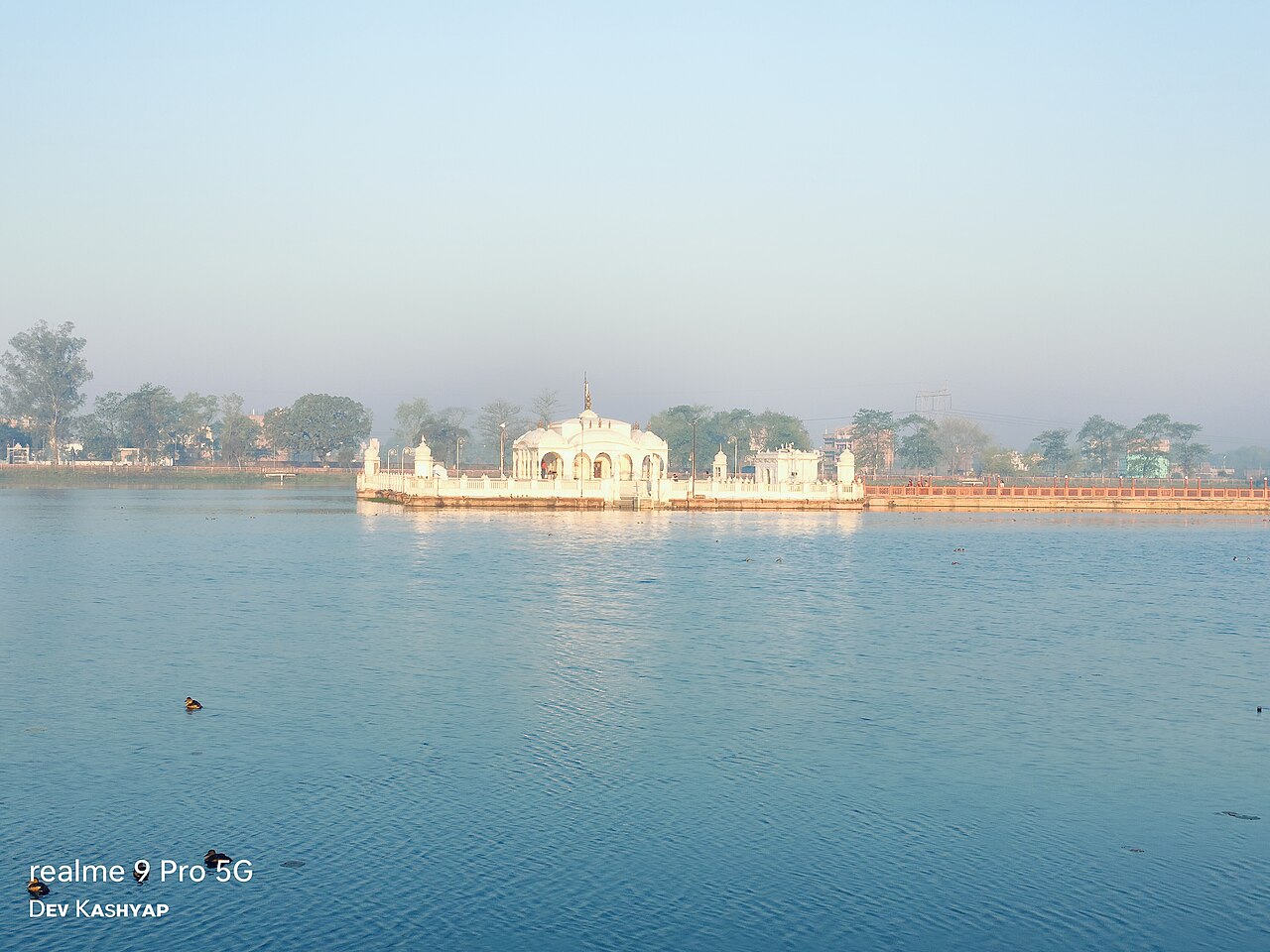
Tucked into the green plains of Nalanda district in Bihar, Pawapuri (also spelt Pawa or Apapuri) is one of the holiest sites in Jainism. It is revered as the place where Lord Mahavira, the 24th and final Tirthankara, attained nirvana and was cremated more than 2,500 years ago. According to tradition, devotees took away so much earth from the cremation spot to keep as sacred relics that a pond formed, in the middle of which the gleaming white-marble Jal Mandir, or Water Temple, now stands surrounded by red and pink lotus blossoms. Pawapuri makes an easy, soulful weekend getaway from Patna, Gaya, Nalanda and Rajgir, all within a short drive. Beyond its spiritual heart, the town offers a quiet, slow rhythm: pilgrims circling marble shrines, the chime of temple bells, vegetarian thalis served with warmth, and lotus ponds that glow at sunrise and sunset. It pairs naturally with the ancient ruins of Nalanda University and the hot springs and hills of Rajgir, making it part of a rich Buddhist-Jain heritage circuit. Whether you come as a devotee or a curious traveller, Pawapuri rewards you with calm, history and some of Bihar's most photogenic temple architecture.
Top Attractions
Jal Mandir (Water Temple)
Pawapuri's iconic landmark, this white-marble temple rises from the centre of a large lotus pond and marks the spot of Lord Mahavira's cremation. A long stone causeway leads pilgrims across the water to the shrine, which enshrines his footprints. At dawn and dusk the marble reflects in the lotus-dotted water for a serene, photogenic scene. It is a peaceful place for quiet reflection rather than crowds.
Visitor Information
- Entry Fee: Free
- Hours: Approx. 6:00 AM - 7:00 PM daily
- Best Time: Early morning or sunset
- Tip: Remove leather items and shoes before the causeway, and dress modestly as it is an active place of worship.
Samosharan Mandir (Gaon Mandir)
Located in the older part of the village, this temple marks the site where Mahavira is said to have delivered his final sermon and attained nirvana. The multi-tiered structure represents the divine preaching hall, or samavasarana. It is one of the most sacred Jain shrines in Pawapuri and draws steady streams of pilgrims, especially during festival days, who come to pay respects at this deeply significant spot.
Visitor Information
- Entry Fee: Free
- Hours: Approx. 6:00 AM - 7:00 PM daily
- Best Time: Morning
- Tip: Combine it with the Jal Mandir on the same visit since both are close together within the town.
Nalanda University Ruins (Excavated Site)
About 15 km away, the UNESCO-listed ruins of Nalanda are among India's most remarkable ancient sites. This was one of the world's earliest residential universities, flourishing from the 5th century, with brick monasteries, lecture halls and stupas spread across a vast lawned campus. Walking among the weathered red-brick cells gives a vivid sense of scholarly life over a thousand years ago. An essential half-day trip from Pawapuri.
Visitor Information
- Entry Fee: INR 25-40 for Indians, around INR 600 for foreigners
- Hours: 9:00 AM - 5:00 PM (closed Fridays)
- Best Time: Morning, before it gets hot
- Tip: Hire a local guide at the entrance to bring the ruins to life with their stories.
Rajgir Hot Springs & Vishwa Shanti Stupa
Around 25 km from Pawapuri, Rajgir is a historic valley town with warm sacred springs (Brahmakund) at the base of the hills. A ropeway carries visitors up to the gleaming white Vishwa Shanti Stupa (Peace Pagoda) for sweeping views over forested ridges. Rajgir is layered with Buddhist, Jain and Hindu significance, making it a rewarding companion destination on a Pawapuri weekend itinerary.
Visitor Information
- Entry Fee: Springs free; ropeway around INR 80-100
- Hours: Ropeway approx. 8:00 AM - 5:00 PM
- Best Time: Morning for the ropeway
- Tip: The ropeway is a single-seater chairlift; go early to avoid queues and midday heat.
Digambar Jain Temple
Pawapuri has several beautifully maintained Digambar and Svetambara Jain temples beyond the famous Jal Mandir. These shrines feature intricate marble carving, mirrored interiors and serene idol halls. Strolling between them gives a quiet sense of the town's living devotional culture, with priests, pilgrims and the gentle ritual rhythm of daily worship. They are usually uncrowded and welcoming to respectful visitors of all backgrounds.
Visitor Information
- Entry Fee: Free
- Hours: Approx. 6:00 AM - 8:00 PM
- Best Time: Late afternoon
- Tip: Photography is sometimes restricted inside shrine halls; always ask before taking pictures of idols.
Lotus Ponds & Town Walk
The lotus ponds that ring the Jal Mandir are a highlight in themselves, especially in the post-monsoon months when the pink and red blooms are at their peak. A slow walk around the water and through the small bazaars reveals everyday Bihar: tea stalls, sweet shops, flower sellers and pilgrims. It is an unhurried, atmospheric way to soak up the town's gentle spiritual mood.
Visitor Information
- Entry Fee: Free
- Hours: Open all day
- Best Time: Sunrise or sunset for the lotuses and light
- Tip: Carry water and a hat; there is little shade around the open ponds at midday.
Food & Local Flavours
Pawapuri is a strictly vegetarian, often sattvic-leaning destination given its Jain pilgrim character, with simple Bihari home-style food dominating.
Litti Chokha
Bihar's signature dish: roasted whole-wheat dough balls stuffed with spiced roasted gram flour (sattu), served with chokha, a smoky mash of roasted brinjal, tomato and potato. Drizzled with ghee, it is hearty, rustic and deeply satisfying. A must-try in and around Pawapuri.
Price: INR 40-100 per plate
Try: Roadside dhabas and stalls in Pawapuri and on the Nalanda road
Sattu Paratha & Sattu Sharbat
Sattu, roasted gram flour, is the protein-rich heart of Bihari cuisine. Try parathas stuffed with spiced sattu, or the cooling sattu sharbat, a savoury or sweet drink mixed with water, lemon and spices, perfect on a hot day of temple-hopping.
Price: INR 20-60
Try: Local eateries and drink stalls near the temples
Bihari Vegetarian Thali
A simple, filling plate of dal, seasonal sabzi, rice, roti, pickle and sometimes kadhi, reflecting the everyday home cooking of the region. At pilgrim dharamshalas it is often cooked without onion or garlic in keeping with Jain dietary practices.
Price: INR 80-150
Try: Dharamshala dining halls and small restaurants in town
Khaja & Local Sweets
Bihar is known for khaja, a crisp, flaky, layered fried pastry soaked in sugar syrup, alongside pedas and other milk sweets sold near the temples. They make a good light snack between shrine visits or a sweet souvenir to carry home.
Price: INR 200-400 per kg
Try: Sweet shops near the Jal Mandir and in nearby Biharsharif
Practical Information
Getting Around
- Auto-rickshaw / e-rickshaw: INR 20-80 per ride — best for short hops between temples within town
- Taxi / cab from Patna or Rajgir: INR 1,500-3,000 for a day trip — convenient for covering Nalanda and Rajgir too
- Local bus: INR 20-60 — frequent services link Pawapuri with Biharsharif, Nalanda and Rajgir
- On foot: Free — the main temples and ponds are walkable and best explored slowly
Budget Guide (Per Day)
- Budget: INR 800-1,500 (~$10-18): a dharamshala or basic guesthouse bed, dhaba meals and shared autos
- Mid-range: INR 2,500-4,500 (~$30-55): a comfortable hotel in Rajgir or Biharsharif, a hired cab and sit-down meals
- Luxury: INR 6,000+ (~$72+): the best available resort in Rajgir, a private car with driver and guided heritage tours
Best Time to Visit
- October to March: pleasant, cool weather ideal for temple visits and the post-monsoon lotus blooms
- Diwali / Mahavira Nirvana days: spiritually vibrant with rituals and crowds, as Pawapuri is linked to Mahavira's nirvana
- Avoid April to June: Bihar summers are very hot and humid, draining for open-air sightseeing
Interactive Map
Explore Pawapuri on the map.
Plan Your Trip
Build a personalised day-by-day itinerary for Pawapuri in 60 seconds.
Open Trip PlannerImage Credits
Pawapuri — Bihar samagra, CC BY-SA 4.0 via Wikimedia Commons